
Weekly Exclusives
How Russia’s Record Losses Threaten Its Summer Offensive. A May Reality Check for Russia’s Much-Touted Arsenal. Our Videos Have Led Enemy Soldiers to Surrender” — Ivan Petrychak.
Photo and video of the week
Large-scale exercises of the State Emergency Service of Ukraine employees, including air rescuers and employees of the special unit “Delta” of the SES, took place in Cherkasy.
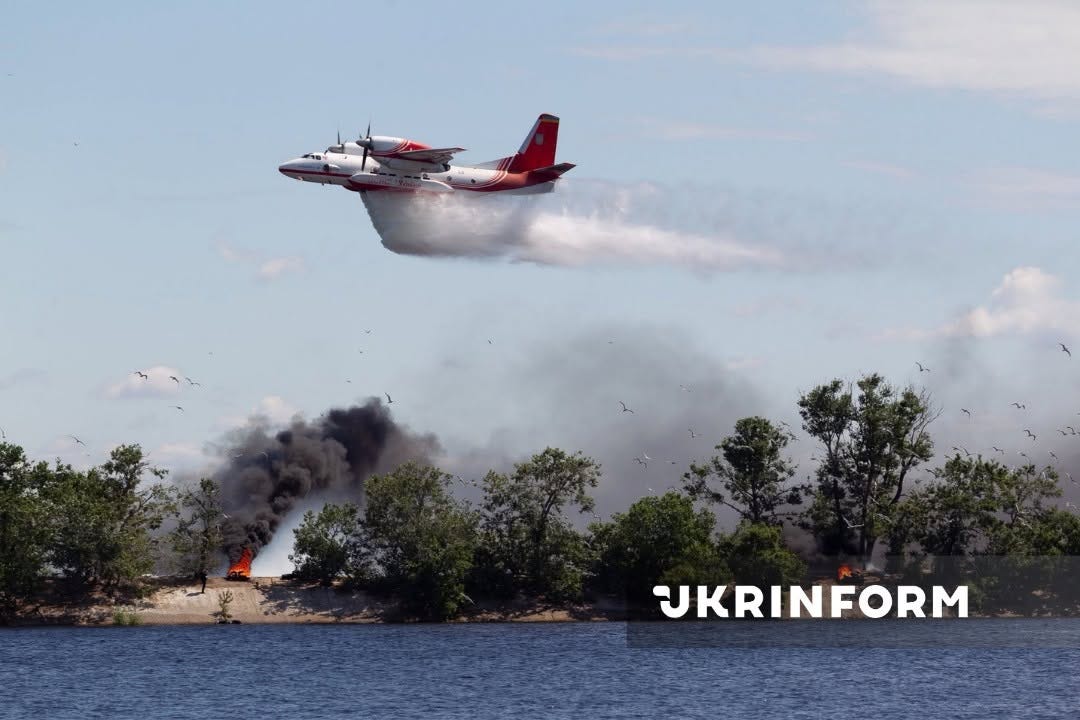
The response to a number of situations was practiced: conducting aerial radiation monitoring, a search and rescue operation on a vessel damaged by debris, evacuation of people on board a helicopter; emergency aeromedical evacuation of a wounded person from a watercraft.
Interview
Drones are critically important, but infantry remains indispensable
Volodymyr “Bob,” Corps Command Sergeant Major, Third Army Corps
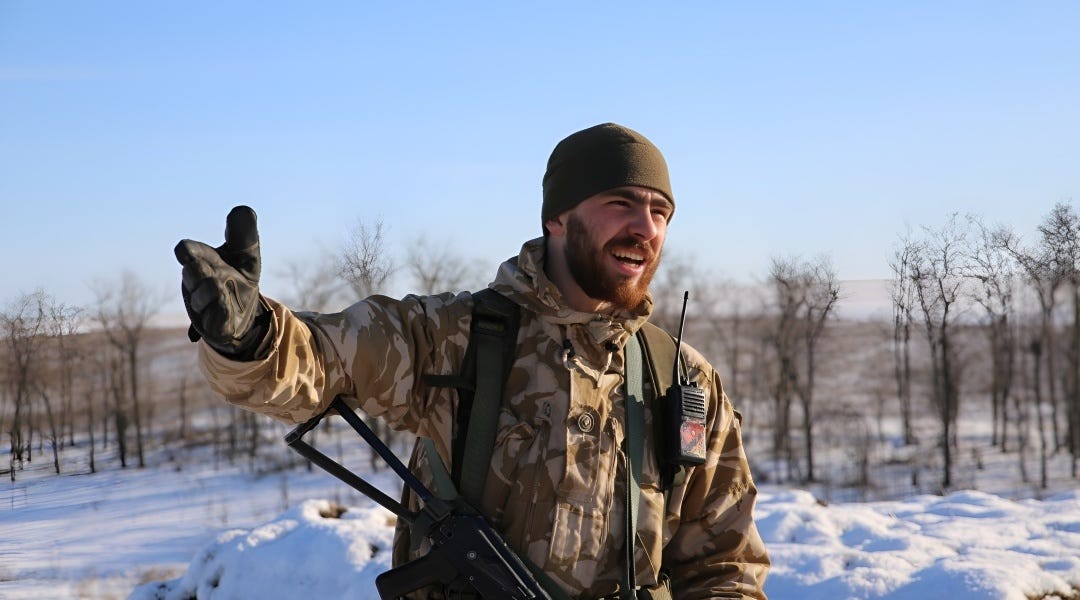
A year ago, the Third Army Corps became the first corps in the Armed Forces of Ukraine to take brigades under command and deploy them into combat formations. Today, it remains the only corps fighting with its own subordinate units within its designated sector, holding more than 150 kilometers of the front line—roughly 12 percent of the active line of contact. How was this achieved?
The answer lies in a systematic approach: reforms in command and control, training, and technology that the Third Corps has consistently implemented across both its organic brigades and attached units.
Ukraine is the only country that fully understands the enemy
Line Rindvig, CEO of Defense Builder
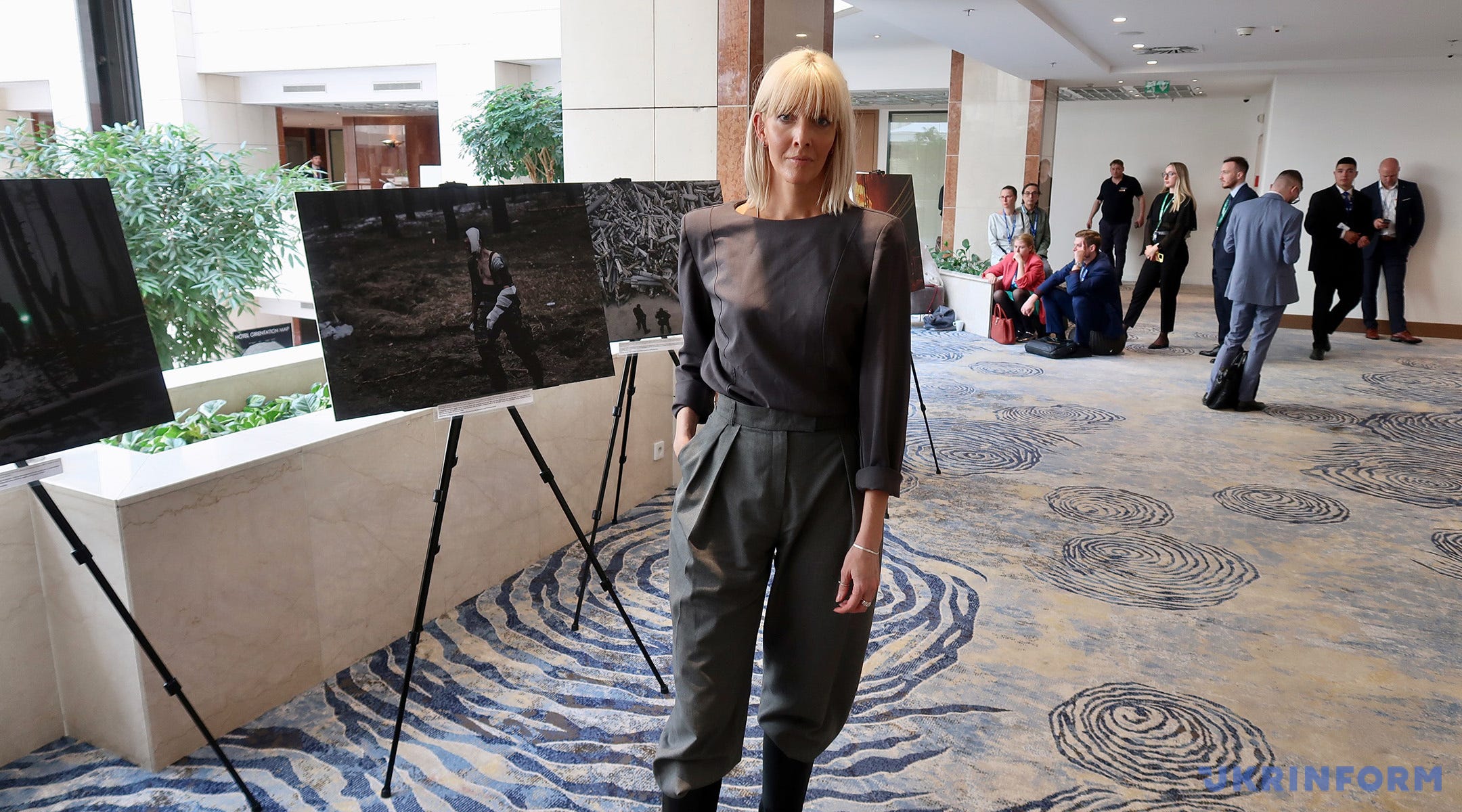
For nearly three years, the Ukrainian defense startup accelerator Defense Builder has been helping the country’s defenders gain access to the most innovative and original technologies developed by emerging startups that are still relatively unknown.
Since September 2025, Defence Builder has been led by Danish executive Line Rindvig. After Russia’s full-scale invasion began, she realized she could not stand aside and became actively involved in volunteer efforts in Ukraine. She worked on logistics, coordinated humanitarian and military aid, developed strategic partnerships, and led advocacy initiatives aimed at raising international awareness of Ukraine’s defense needs.
Ukrinform spoke with Rindvig about which unmanned technologies are likely to be most relevant on the battlefield in the coming months, the contribution small companies are making to their development, and how the accelerator helps ensure that cutting-edge technologies reach Ukrainian defenders as quickly as possible.
Ukraine is showing the world how fast warfare is changing
Lieutenant-General (Ret’d) Christopher Coates Former Commander of Canadian Joint Operations Command
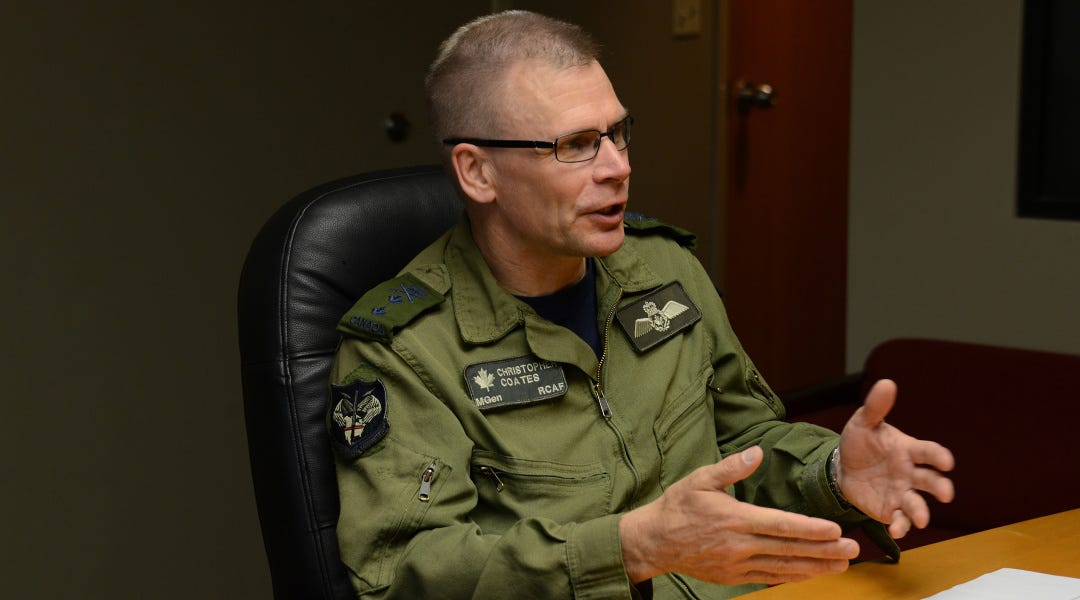
Lieutenant-General (Ret’d) Christopher Coates, former Deputy Commander of NORAD and Commander of the Canadian Joint Operations Command, has recently returned from Ukraine in his capacity as Director of Foreign Policy at the leading Canadian think tank, the Macdonald-Laurier Institute.
In the interview with Ukrinform, he discusses the current state of the war, Russia’s vulnerabilities, Ukraine’s drone revolution, and why Western defence systems are struggling to keep pace with modern conflict.
Following the Xi–Trump meeting, it appeared that the United States had accepted China as a peer
Natalia Butyrska, an analyst at the New Europe Center
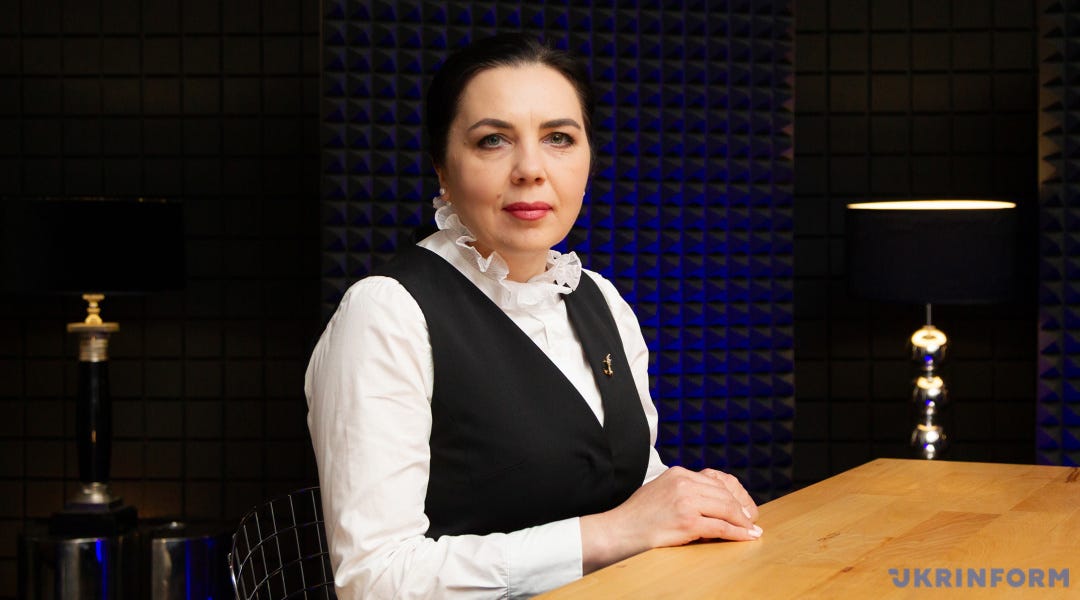
May has come to an end, distinguished in part by the fact that the People’s Republic of China held the rotating presidency of the United Nations Security Council.
At first glance, this may seem like a routine event, as all Security Council members assume the presidency in turn. In China’s case, however, the occasion carried particular significance. First, 2026 marks an important anniversary for the PRC: 55 years have passed since it regained its seat at the United Nations. Second, May saw a state visit to Beijing by U.S. President Donald Trump, followed shortly thereafter by a visit from Vladimir Putin.
As a result, Beijing became a focal point where major international developments and competing interests converged throughout the month. In many respects, it served as one of the key venues where the contours of the emerging world order were being shaped.
To explore these developments, Ukrinform is joined by Natalia Butyrska, an expert at the New Europe Center specializing in Indo-Pacific affairs.
No Potential Successor to Putin Appears Ready to Pursue a Different Policy
Annegret Kramp-Karrenbauer, Chair of the Konrad Adenauer Foundation
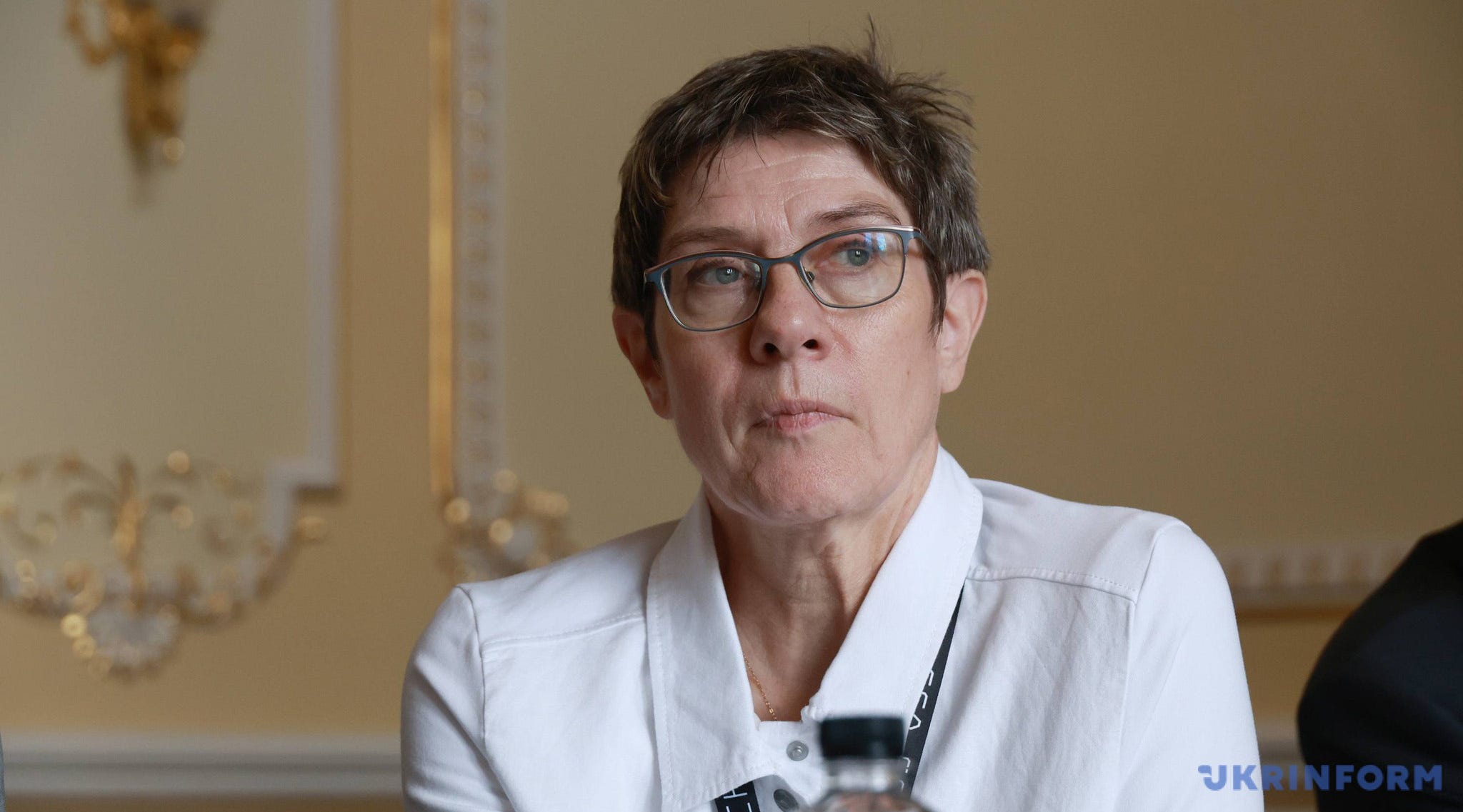
Former German Defence Minister and current Chair of the Konrad Adenauer Foundation, Annegret Kramp-Karrenbauer, recently visited Ukraine for the Black Sea Security Forum 2026, where prominent security and foreign policy experts gathered to discuss the security challenges facing the Black Sea region, which Russia continues to use as a tool of military, economic, and political pressure.
During her first-ever visit to Ukraine, Kramp-Karrenbauer spoke with Ukrinform about the prospects for ending the war, Europe’s role in supporting Kyiv, and Ukraine’s path toward European integration. She also addressed the issues of long-term military and financial assistance, the potential use of frozen Russian assets for Ukraine’s post-war reconstruction, and the reforms required for the country’s accession to the European Union.
Freedom is made of thousands of small steps we take together
Robin Imthorn, Dutch Volunteer and Marine Corps Veteran
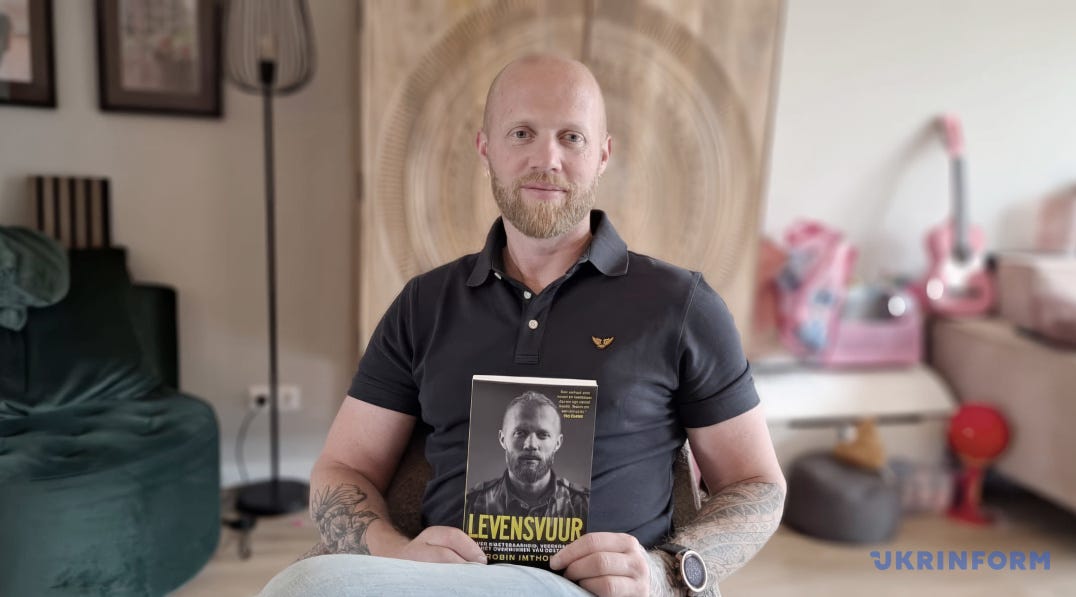
Robin Imthorn is a Dutch Marine, veteran, specialist in psychological rehabilitation and post-traumatic growth. For his work, he was awarded the Legion of Honour Award.
Since the beginning of Russia’s full-scale invasion of Ukraine, Robin Imthorn has been actively supporting Ukrainian service members and medical professionals. He works closely with Ukrainian experts in the fields of combat trauma recovery, veterans’ psychological rehabilitation, and the development of post-traumatic growth programs. He also participates in international initiatives aimed at facilitating the exchange of experience between Ukrainian and European medical and veteran communities.
Robin is the author of the book Levensvuur (Fire of Life, ed.) and the initiator of the international charitable initiative Mission Kyiv, which supports Ukrainian veterans. In June of last year, four Ukrainian veterans and four active-duty Dutch service members set out from The Hague to the Ukrainian border with the goal of raising €100,000 for medical care, rehabilitation, and psychological support for Ukrainian veterans and their families.
Last year, Ukrainian and Dutch veterans covered a distance of 2000 kilometers from The Hague, raising nearly €130,000 for medical and psychological assistance.
Robin Imthorn sees his mission in supporting Ukrainian defenders and civilians who have experienced the trauma of war, while also sharing knowledge about modern approaches to psychological recovery, resilience, and post-traumatic growth.
Publications
Our Videos Have Led Enemy Soldiers to Surrender” — Ivan Petrychak, Head of the 24th Brigade’s Press Service
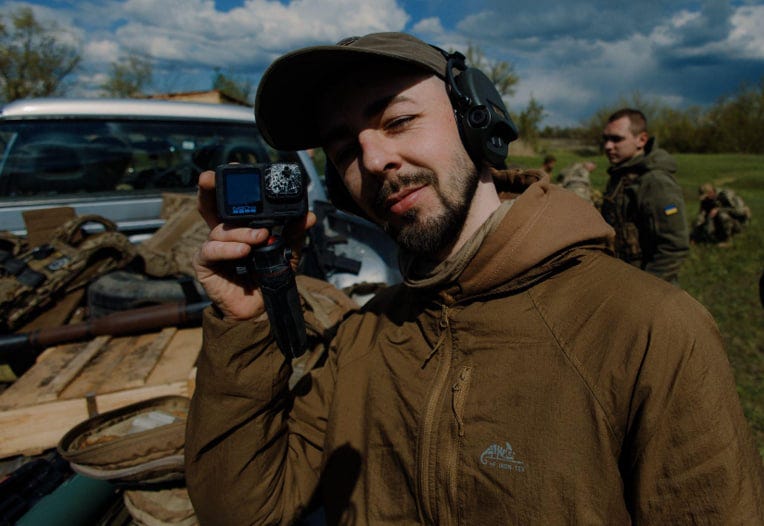
“Finding an exclusive story in wartime has become incredibly difficult. The only true exclusive today is telling the stories of heroes—the people themselves and the paths their lives have taken. And to do that, you have to get as close as possible.”
This is how Ivan Petrychak, head of the press service of the 24th Separate Mechanized Brigade named after King Danylo and a former TSN television journalist now serving in the military, describes the realities of reporting during war.
Ahead of Journalist’s Day, Petrychak spoke with the Information Service of the National Union of Journalists of Ukraine (NUJU) about the stories military journalists and communicators are recording for history, the challenges they face, and the resilience that has become an indispensable part of their profession.
From the Front Lines of War Reporting
A Spring Campaign in Ruins: How Russia’s Record Losses Threaten Its Summer Offensive
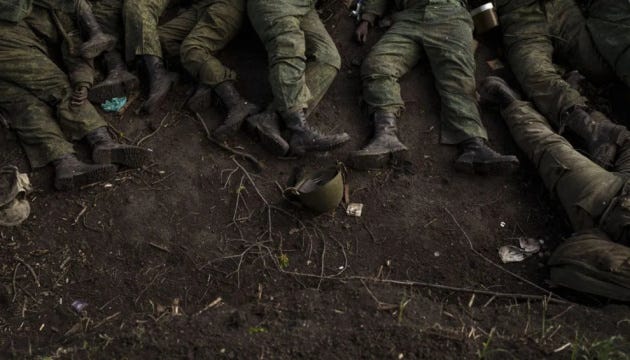
Throughout May, the intensity of combat operations along the Ukrainian front reached an unprecedented level. According to Ukraine’s General Staff of the, more than 7,000 combat engagements were recorded in a single month. Yet behind the façade of the enemy’s extraordinary operational activity lies a deepening crisis within Russia’s war machine. Rather than securing major operational breakthroughs, Russian forces suffered staggering attrition and set new records for battlefield losses. The spring offensive campaign effectively exhausted itself, giving way to a summer phase that the Russian military enters burdened by increasingly severe logistical strain.
How record Russian losses, mounting logistical strain, and shifting battlefield dynamics are shaping the summer campaign. Read
A May Reality Check for Russia’s Much-Touted Arsenal
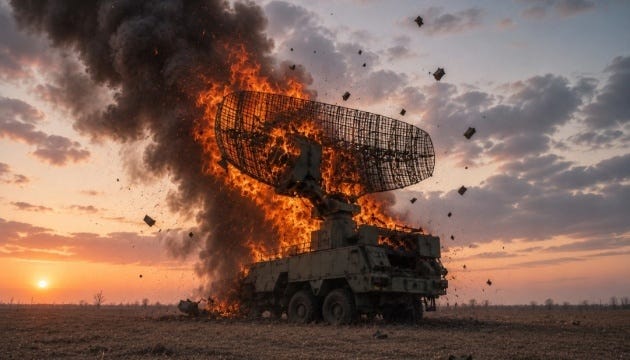
How Ukrainian Defenders Thinned the Ranks of Russia’s ‘No-Analog’ Weapons in May
In May 2026, according to confirmed reports from the General Staff, the Unmanned Systems Forces, the Special Operations Forces, and the Security Service of Ukraine (SBU), Ukraine’s Defense Forces struck at least three dozen high-value components of Russia’s air defense and radar network. The list also included several warships and boats, aritime patrol aircraft, Iskander operational-tactical missile systems, communications hubs, drone command centers, and other costly specimens from the showcase collection of Russia’s defense-industrial complex.
The geography of the strikes was no less remarkable. In addition to the usual locations featured in such reviews—Crimea and the Donetsk, Luhansk, and Zaporizhzhia regions—Ukrainian strike assets regularly visited Russia’s Bryansk and Rostov regions, Krasnodar Krai, and even the waters of the Baltic and Caspian seas.
And while Russian propaganda was still talking about an “impregnable rear” just two years ago, today even warships in distant Kaspiysk, Dagestan—more than 1,500 kilometers from Ukraine—are becoming acquainted with Ukrainian drones at a range far closer than they would prefer.
This Ukrinform review takes a look at the grand May barbecue that Ukrainian defenders served up for some of the most heavily promoted products of Russia’s defense industry.
Will Armenian Lavash Share the Fate of Ukrainian Palyanytsia?
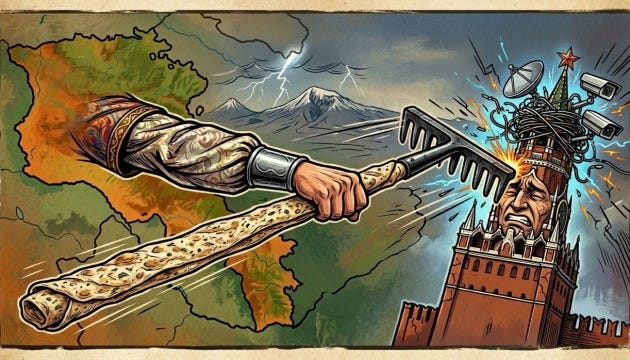
For Moscow, perhaps the most painful realization is that even Yerevan has now effectively put it on the blocked list
Moscow has just endured another sleepless “election night”—this time in Armenia. Then again, perhaps “sleepless” is an exaggeration. By 12:40 a.m. on June 8, Ukrainian collaborator and Kremlin loyalist Oleg Tsaryov had already admitted defeat: “We lost in Armenia. The only question is by how much—whether as badly as in Hungary or not.” Having received yet another blow from its own political miscalculations, Moscow went to bed restless, once again nursing the bruise left by a rake of its own making.
In the run-up to the Armenian elections, the Kremlin deployed its full arsenal of pressure tactics—methods all too familiar to Ukrainians who remember the days of Russia’s chief sanitary inspector, Gennady Onishchenko. Whenever Kyiv showed signs of moving closer to Brussels, he invariably discovered heavy metals, dangerous bacteria, or even threats to national security lurking in Ukrainian chocolates, cheese, and fruit juices.
Winning Hearts and Minds: How Ukraine Can Reach the Arab World
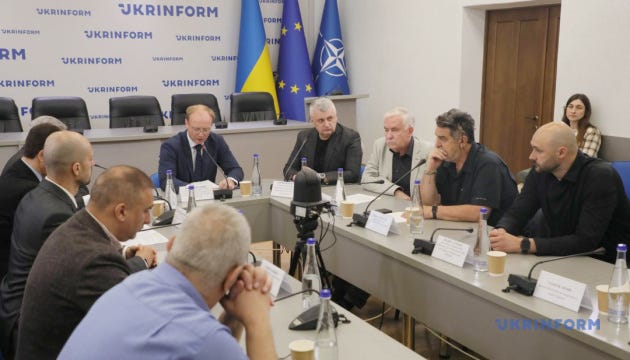
Ukrinform Goes Arabic: Ukraine’s Message to the Region Should Be Shaped by Diplomats, Analysts, Military Experts, and Information Security Professionals
Geopolitical turbulence and the rapid transformation of the international order are prompting countries to reassess the value of partnerships and regional alliances. Against this backdrop, the growing engagement between Ukraine and the Middle East has taken on particular significance, especially as security challenges across the region continue to intensify.
Yet this engagement did not emerge overnight. In recent years, Ukraine has built not only economic ties with a number of Middle Eastern countries but also effective humanitarian and diplomatic channels of cooperation.
Panorama of Sevastopol’s Defense: The “Impregnable Fortress” in Search of Bomb Shelters

Occupied Ukrainian Peninsula Is Turning into a Russian Island
The latest strike on the former base of Russia’s Black Sea Fleet sparked a full-blown “historic” drama among the occupiers. According to the local occupation governor, Mikhail Razvozhayev, the famous panorama museum Defense of Sevastopol 1854–1855 was virtually destroyed.
“The situation is extremely difficult,” he lamented. “It is already clear that Franz Roubaud’s great masterpiece has been practically destroyed.”
In reality, Roubaud’s original panorama was lost in a fire during World War II, in 1942. The work later presented as the celebrated “masterpiece” was in fact a Soviet reconstruction—a replica created in the 1950s. Yet while Razvozhayev was painting a picture of cultural apocalypse, museum staff themselves stepped forward to reassure the public that not everything had been destroyed. Clearly, communication remains a challenge.
Fact Checks
Russian propaganda fakes Human Rights Watch video claiming 76 Ukrainian families died at border
Russian Telegram channels are circulating a video allegedly issued by the international human rights organization Human Rights Watch, which purports to show Ukrainian men allegedly traveling with their wives and children during attempts to illegally cross the border, supposedly believing this would protect them from border guards.
The fabricated narrative further claims that Ukrainian border guards allegedly opened fire on such groups, resulting in the “deaths” of 76 Ukrainian families since the beginning of the year. The video also includes a supposed quote attributed to former Human Rights Watch Executive Director Tirana Hassan, claiming that Ukrainians are in “complete despair.”
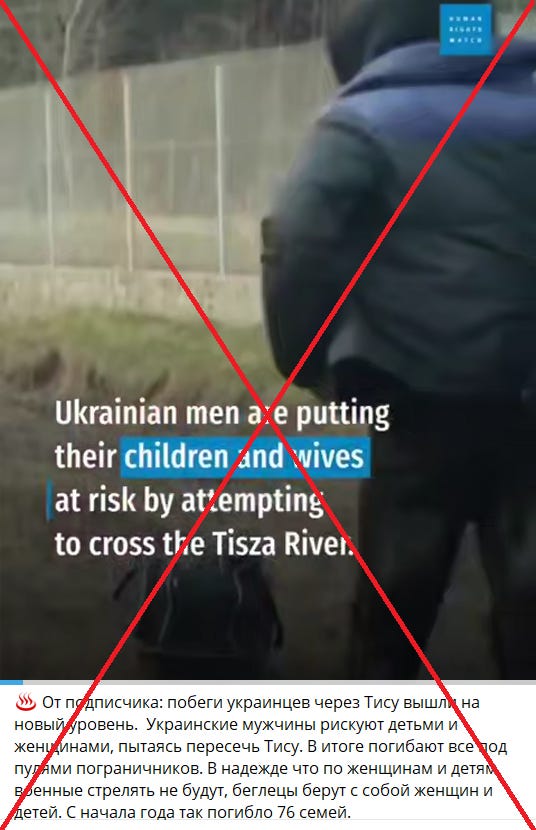
The claim is false. No such video exists on the official website or verified social media accounts of Human Rights Watch.
An analysis of the video shows it was assembled using publicly available photos and footage from the internet.
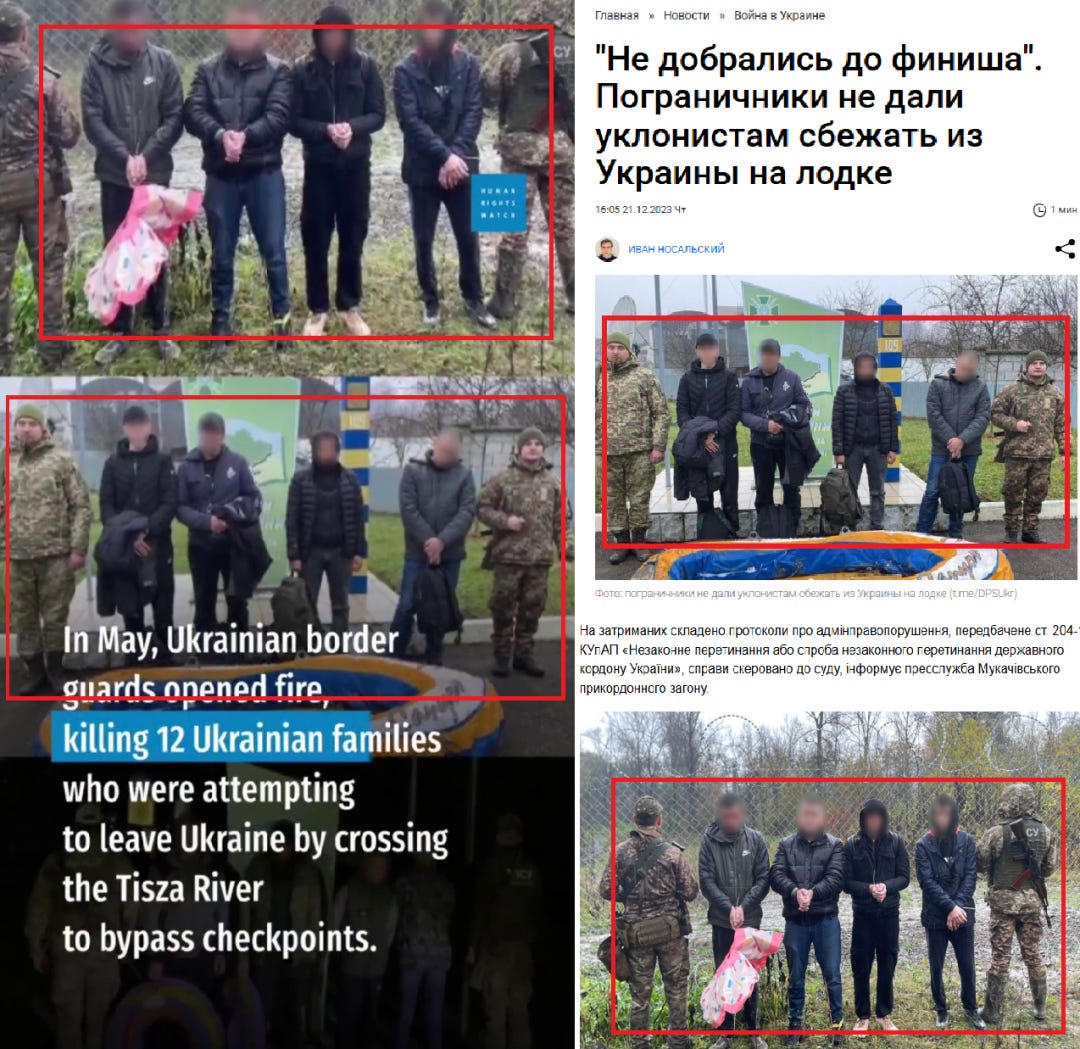
There are also no statements from Tirana Hassan or Human Rights Watch matching the quote included in the fake video.
Ukraine’s Center for Countering Disinformation confirmed that the video is fabricated. Analysts said Russian propaganda systematically creates such forgeries in the names of Western media and human rights organizations to legitimize information manipulation.
The disinformation is part of a broader Russian campaign against Ukraine. By using the name of Human Rights Watch, propagandists aim to discredit Ukraine’s border service, demoralize society, and promote the false narrative that Ukrainians are fleeing en masse and using women and children in illegal border crossings.
Earlier, Russia had also circulated fake videos impersonating global media outlets to discredit Ukrainian refugees.
By Andrii Olenin
News:
War
Politics
“War is not best time to discuss complex history,” - former FM of Poland
Former Polish FM backs Budanov visit to Warsaw, says it is right move
G7 cities must stand with Ukraine’s communities, Nancy Mayor says
Ukraine expects more seizures of ships carrying stolen grain after Swedish court ruling
Economy
Despite Putin’s claims, Russia increasingly taking on traits of ‘failed state’ – Vlasiuk
Lithium deposit in Kirovohrad region expected to sustain mining for decades
Society
Another group of Ukrainian Legion volunteers to sign contracts in Lublin on June 26
Kniazev bribery case: Former Supreme Court chief to serve over four years
Forest growing on site of Kakhovka Reservoir protected under Bern Convention, scientist says
Ukrainian soldier Pavlo Turchyn of 46th Brigade returns home
See you next Friday!
The United States is a country with many people fighting for Democracy and trying to get rid of Trump's regime and wanting to help Ukraine. We're being robbed while this regime is committing war crimes and treating migrants like Jews in concentration camps, first time in 100 years. They're the ones looking at China as a peer. Others have their heads buried in the sand, oblivious as to what's happening due to the propaganda. I pray for the people of Ukraine and other countries because of Tyrant's actions like Trump, Putin, Xi and other dictators. I admire Zelensky and the people of Ukraine So Much and the suffering Breaks my heart. So Please Know that there are Many people here that stand by you. Some may not be able to financially support money wise. At least, with President Biden, I had some satisfaction, knowing the higher prices were to benefit Ukraine, although I didn't agree with the continued support of Isreal after they were clearly committing genocide in Gaza.
God Bless!