
Weekly Exclusives
Weekly Exclusives - a newsletter that contains author publications, interviews, exclusive comments, photos and videos.
Report
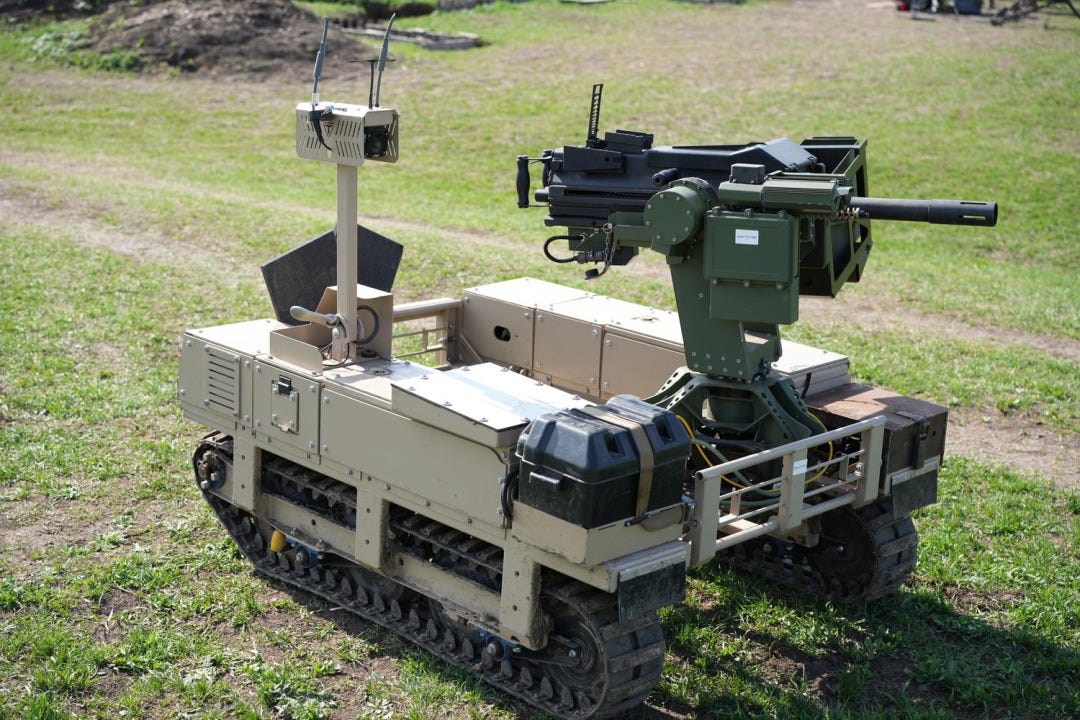
War Goes Robotic: The New Face of Land Combat
Advances in reconnaissance and strike UAVs have significantly expanded the “kill zone”—the frontline area under constant fire. This has made concealed troop movement nearly impossible and complicated logistics. At the same time, it has accelerated the development of ground robotic systems (GRS), which are increasingly used for fire support, frontline resupply, and the evacuation of the wounded and fallen—reducing risks to personnel.
Interview
Kyrylo Budanov, Head of the Presidential Office, Lieutenant General
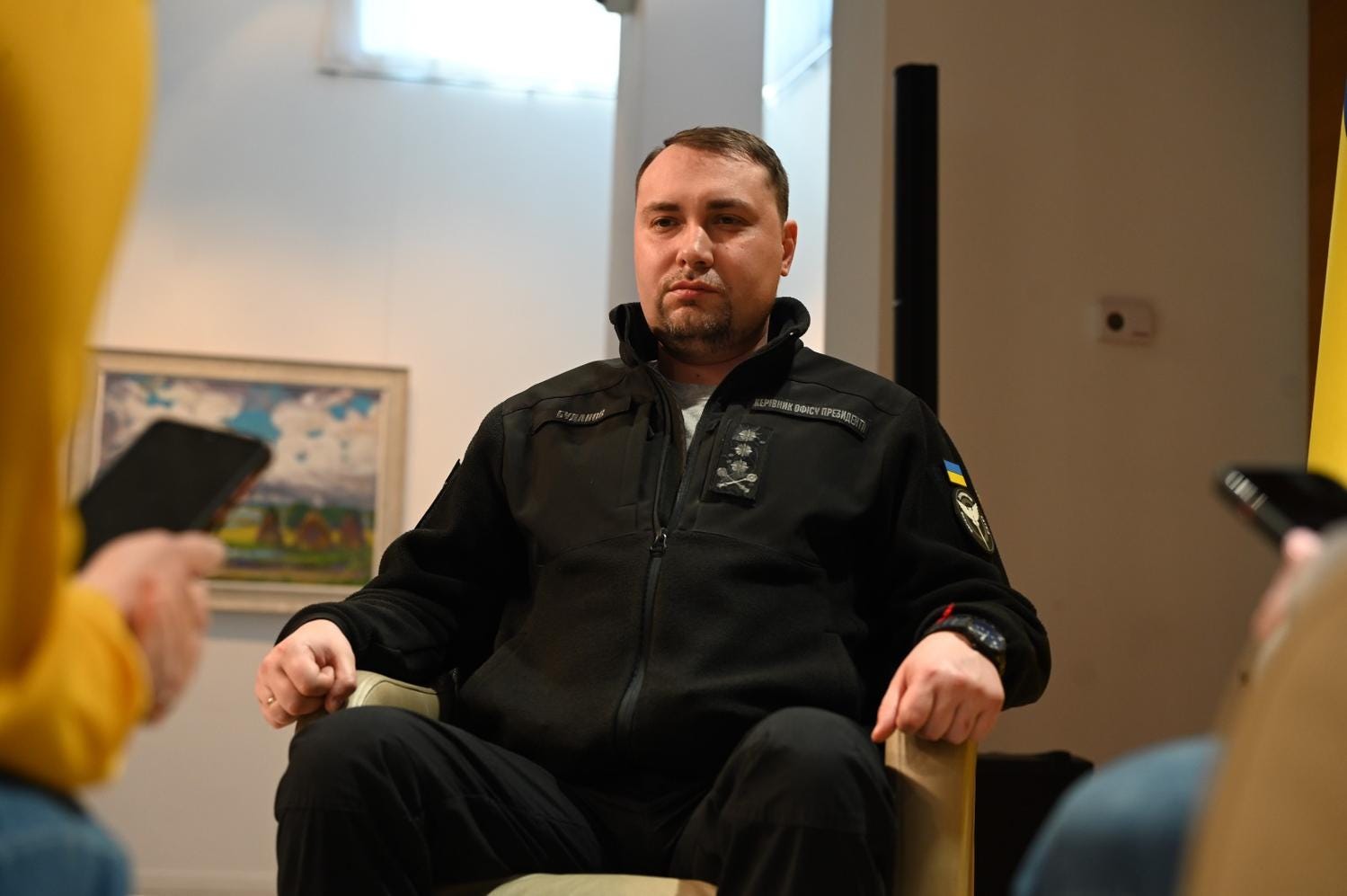
No Pause on Russian Refinery Strikes as War Drags On
Expectations of a major prisoner exchange around Easter, continued strikes on Russian infrastructure, and efforts to overcome the political crisis in parliament—these and other issues were addressed by Lieutenant General Kyrylo Budanov, Head of the Office of the President of Ukraine, in a joint interview with Ukrinform and Novyny.LIVE.
He also spoke about why drones cannot replace infantry, how the war in the Middle East is indirectly benefiting the aggressor, and whether a meeting between Volodymyr Zelensky and Vladimir Putin is possible to bring the war to a definitive close.
Valentyn Badrak, Director of the Center for Army, Conversion and Disarmament Studies
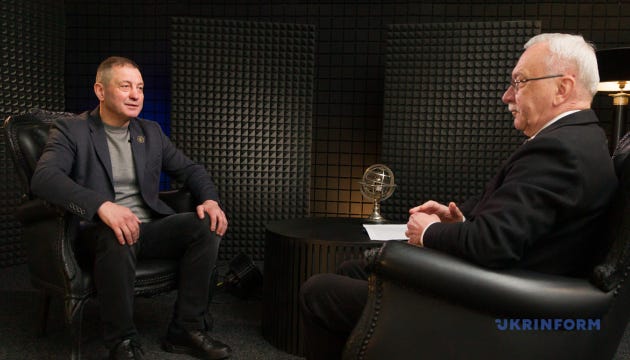
The U.S.–Iran Ceasefire: A Fragile Truce with No Real Winners
The world breathed a sigh of relief—the “destruction of civilization” did not materialize. Just 90 minutes before yet another deadline, President Trump announced a two-week ceasefire, adding that negotiations would continue based on the ten points proposed by the Iranian side, with what appears to be a preliminary agreement in principle.
The statements sounded highly optimistic—a major step and a tangible outcome that immediately reverberated across both oil and stock markets. Yet this is clearly not the end of the story, nor even the beginning of the end of the war in the Middle East.
What conclusions can already be drawn, and what lies ahead? Ukrinform discussed this with Valentyn Badrak. (The conversation took place on April 9.)
MEP Petras Austrevicius

Damage done by Orban to EU is immense
In the run-up to the election in Hungary, the media space was blown up by the reports by Hungarian investigative journalists about the alleged conspiracy between Hungary and Russia to the detriment of EU’s interests. The leaks of sensitive information to Moscow by foreign minister Szijjarto and kind offers of various help to the Kremlin by Prime Minister Viktor Orban sparked sharp reactions in Brussels, raising concerns of the extreme vulnerabilities of EU decision-making. A group of European parliament members, including Petras Austrevicius, penned a letter to EP President Roberta Metsola, where some of these concerns were voiced.
As the election results in Hungary brought relief to many across Europe, Ukrinform sat down with Petras Austrevicius to discuss the ways to prevent or minimize the impact of Russian infiltration of EU institutions, the things to expect from the new government in Budapest in their relations within the EU and with Ukraine, as well as the potential reform of EU-level decision-making to prevent any leader from obstructing constructive cooperation of member states.
Oleksii Shuhailo, Commander of the 132nd Separate Reconnaissance Battalion, 7th Rapid Response Corps, Air Assault Forces, Armed Forces of Ukraine
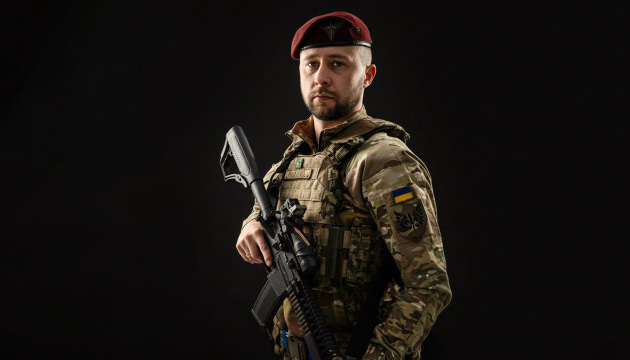
Relentless Pressure: Enemy Forces Destroyed Daily Despite Infiltration Attempts
Since the beginning of the full-scale war, the 132nd Separate Reconnaissance Battalion has carried out missions in the Kyiv, Kharkiv, Zaporizhzhia, and Donetsk regions, and took part in the Kursk operation. Currently, its servicemen are destroying the enemy in the Pokrovsk and Oleksandrivka sectors.
In an interview with Ukrinform, Lieutenant Colonel Oleksii Shuhailo, commander of the 132nd Separate Reconnaissance Battalion within the 7th Rapid Response Corps of the AFU Air Assault Forces, spoke about the most significant operations, the heroism of his soldiers, enemy tactics, and why they are increasingly surrendering. He also discussed the specialists the unit currently needs and the skills required of a modern reconnaissance soldier.
Publications
Overview of the Systematic Destruction of Enemy Air Defense in the First Month of Spring
On March 4, the Commander of the Unmanned Systems Forces (USF/SBS) of the Armed Forces of Ukraine, Robert “Magyar” Browdi released striking figures: over the three winter months, Russian air defense assets were reduced by 54 units—39 surface-to-air missile systems and 15 radars—primarily due to the work of SBS drone operators.
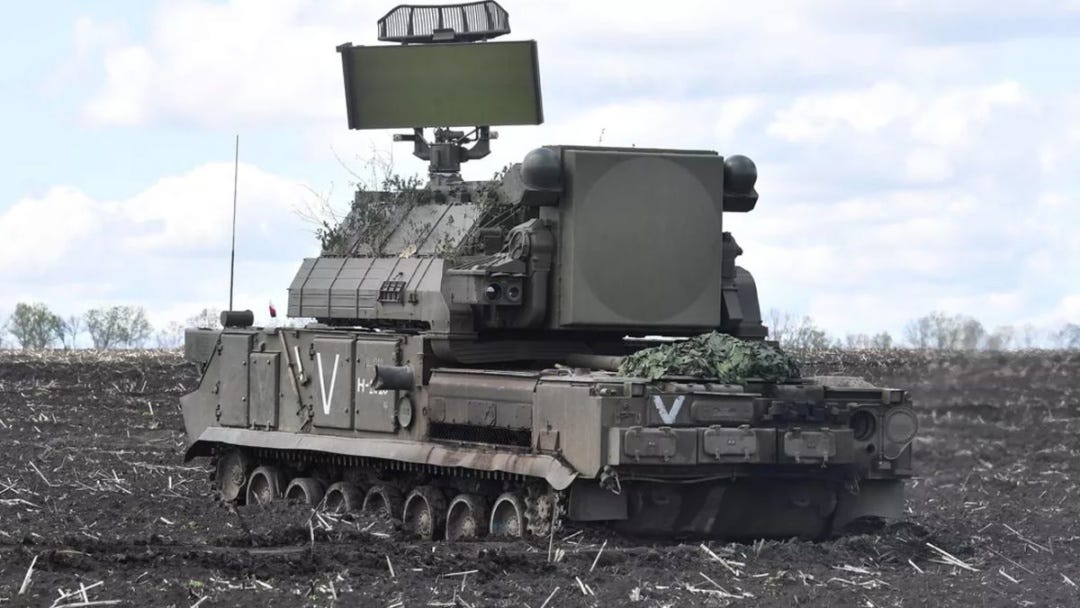
The implication was clear. Losses of such scale, involving costly and technologically sophisticated systems, cannot be attributed to isolated successful strikes, chance, or favorable circumstances. Rather, they point to a deliberate, meticulous, and sustained campaign—one designed to reshape the architecture of the war in its most technologically intensive domain: the airspace.
While Ukraine’s winter successes were both encouraging and significant, they ultimately proved to be only a prelude. What unfolded in March exceeded even the most optimistic expectations. The pace and scale of strikes against Russian air defense formations no longer resembled an accelerating trend; instead, they took on the character of a systematic and large-scale dismantling of Russia’s air defense “umbrella.”
The results are striking. In March alone, SBS units neutralized 41 Russian air defense components. This is no longer a question of incremental losses—it reflects a degradation of system integrity within Russia’s air defense network and a growing inability to sustain its layered defensive architecture.
Further details and a chronological account of Ukraine’s Defense Forces’ successes in March are presented in Ukrinform’s latest overview, focusing on the most significant losses sustained by the Russian army over the past month. Read more
Orbán’s Era Comes to an End
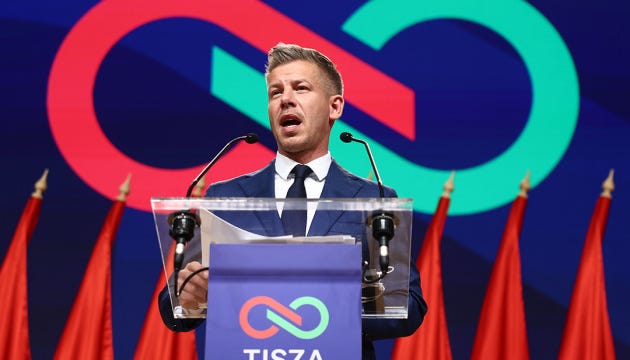
Hungary After the Vote: Implications for Ukraine
On April 12, Ukraine marked Easter and Cosmonautics Day, while Hungary held parliamentary elections—an event set to shape not only the country’s future, but potentially Europe’s as well. The central question was whether frontrunner Péter Magyar and his Tisza party could unseat incumbent Prime Minister Viktor Orbán, who has ruled for 16 years alongside his political force, Fidesz, and prevent Hungary from drifting further toward Moscow within the EU.
It appears they have succeeded. Magyar—until recently little known even among Hungarians—has already received congratulations from Ukraine and European leaders. Who he is, what priorities he brings, and how he may reshape relations with Kyiv are questions Ukrinform set out to explore. Read more
Putin Stripped of His Trump Card in a Stacked Game with Europe
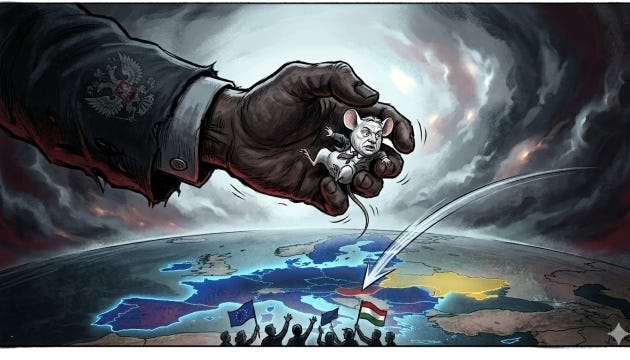
“There is no risk of war in Europe, because Russia is not even capable of defeating Ukraine—a country fully entitled to self-defense and exercising that right with remarkable resilience. Russians understand only the language of force, and Europe must be strong.”
Surprisingly, these words were pronounced by Hungarian Prime Minister Viktor Orbán. He made the statement in June of last year, attempting to appeal to pro-Ukrainian voters at home. The maneuver failed. Europe’s most emblematic “political animal” miscalculated—and suffered a decisive electoral defeat.
Fact Checks

Russian Telegram channels are circulating a video bearing the logo of the French TV channel France 24 and the intro of its fact-checking program Truth or Fake. The video claims that journalists allegedly uncovered information that Ukrainian businessmen hired fortune-tellers and psychics across Europe to “curse” U.S. President Donald Trump. The supposed fee for such services allegedly ranged from $4,000 to $9,000. This is fake.
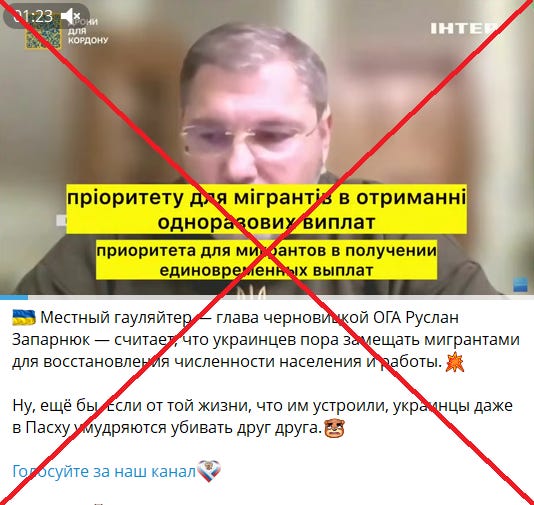
Russian resources, propaganda Telegram channels, and bot accounts on Instagram are spreading a video bearing the logo of the Inter TV channel, featuring a fragment of an interview with former head of the Chernivtsi Regional Military Administration, Ruslan Zaparaniuk. The video alleges that migrants would be granted employment benefits in the region, that women would receive payments for marrying foreigners, and that quotas would be introduced for leadership positions in settlements where foreign citizens form a majority.
News:
War
Fighting continues near Mariine: Tregubov says Russian forces have advanced into Sumy region
Military expert: Russia using two new drafting schemes – via detention centers and universities
Drone strikes on Moscow serve as pressure tool against Russia, expert says
Military expert: Escalation possible in Middle East after April 15
Politics
Magyar’s first visit to Warsaw may help revive Visegrád Group’s role in EU – Czaputowicz
Economy
Retirement age rising in Ukraine as labor market increasingly relies on pensioners – lawmaker
Society
Nearly 270,000 public services identified in Ukraine – Ministry of Digital Transformation
Ukrainian consulates issued nearly 200,000 passports abroad in 2025 – consul general
Over 400,000 Ukrainians live in northern Poland, Consul General says
Language commission does not monitor compliance with spelling rules
Court orders mother of soldier Dmytro Panchuk from Rivne region to return UAH 3.8 M to him
See you next Friday!